To donate a whole home, determine what the family is keeping, then book an estate cleanout donation pickup online. It’s that simple. A vetted pickup team takes the furniture, home goods and clothing from every room and delivers them to local charity partners, so it doesn’t end up in a landfill.
Table of contents
- What is an estate cleanout donation pickup?
- Decide what stays in the family before you book
- How to donate a whole home in 6 steps
- What you can donate from an estate
- Estate cleanout donation pickup vs. junk removal
- How to handle an estate cleanout from out of town
- Ready to clear the house?
- Frequently asked questions
What is an estate cleanout donation pickup?
Every house has them. The hall closet with three decades of winter coats. The dining set that only comes out for the holidays. The basement shelf of Pyrex. When it’s time to clear out a loved one’s home, all of it has to go somewhere, usually at the same time.
An estate cleanout donation pickup is one way to handle that. It clears the usable contents of a home in one visit and sends them to charity instead of a landfill. Families turn to it when they’re settling an estate, downsizing, or helping a parent move into assisted living.
More families are landing in that spot. The U.S. Census Bureau counted 61.2 million Americans 65 and older in 2024, up 13% since 2020, and older adults now outnumber children in 11 states.
Most families end up weighing three options. Rent a truck and make trip after trip to drop-off sites. Pay someone to cart it all away. Or donate. A donation pickup offers the convenience of the second option with the purpose of the third, and that dining set gets a few more holidays somewhere else.
ReSupply, a Veteran-founded service, makes estate donation simple. You book online and list what’s going, any size, from any room and any floor. ReSupply matches the job to the right vehicle and driver. The team carries everything out and takes it to charity partners in your community.
Decide what stays in the family before you book
Before anything leaves the house, someone has to decide what stays with the family. That conversation can take longer than the cleanout itself, so it’s worth starting early.
- Give relatives a date. A deadline to claim items keeps things moving, and it heads off the “wait, who has Grandma’s rocking chair?” conversation six months from now.
- Check with the executor. If the estate is still being settled, get the go-ahead from the executor or estate attorney before anything is removed.
Once the keep pile is settled, everything else is a candidate for donation.
How to donate a whole home in 6 steps
1. Walk the house and make a list
Go room by room and write down the big pieces: sofas, beds, dressers, tables, desks. Take photos while you’re at it. The list makes booking faster, and the photos help relatives who can’t be there see what’s going.
2. Mark what’s going
Painter’s tape or sticky notes on donation items work fine. So does moving everything you’re keeping into one room and closing the door. Either way, the pickup team won’t have to guess.
3. Check condition
Charities need things they can put back into use, so items should be clean, usable and in good condition. Wipe down the furniture, wash the linens and bag up the clothes.
4. Book your pickup online
Select everything you’re donating, from anywhere in the house. Priority pickups for large items are available in 24 to 48 hours.
5. Get the house ready
Clear the walkways and make sure there’s somewhere for the truck to park. Empty dresser drawers and kitchen cabinets. Make a note of stairs and any pieces that might need to come apart. ReSupply will disassemble any item, and take anything you want gone.
6. Let the team do the lifting
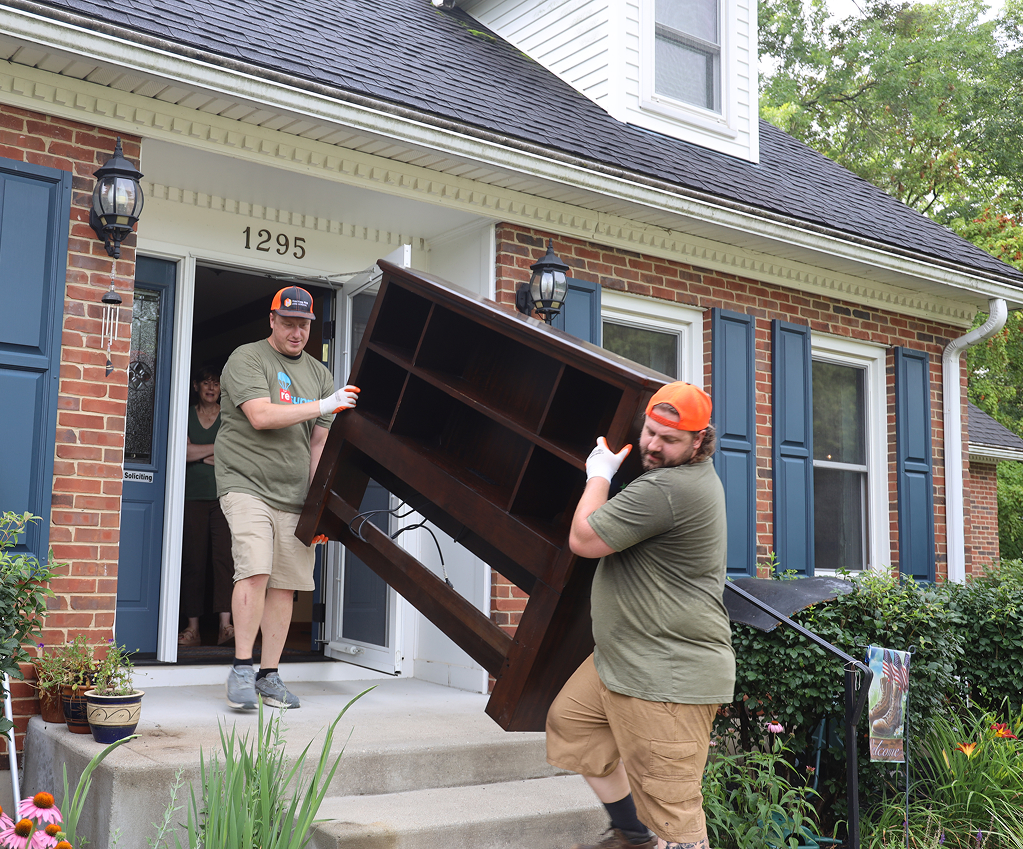
ReSupply’s professional movers handle the heavy pieces, including stairs and bulky furniture from basements and upper floors. They load the truck, take everything to charity, and don’t leave a trace.
What you can donate from an estate
ReSupply picks up furniture, home goods and clothing. In most homes, that covers the bulk of what’s there.
Furniture
The sofa and armchairs. The dining set. Dressers, nightstands and bed frames. Desks, bookshelves, and the entertainment center built around a TV twice as deep as anything sold today. Large-item pickup covers bulky furniture from any room, including basements and upper floors.
Home goods
Dishes, cookware, lamps, rugs, linens, framed art and books. Packing smaller things in boxes and bags makes loading quicker.
Clothing
Coats, shoes and everyday clothes, clean and bagged. Closets tend to hold more than anyone expects, so keep a few extra bags on hand.
What to handle separately
Broken, stained or unsafe items aren’t much use to a charity. Old paint, cleaning chemicals and similar materials should go through your local household hazardous waste program, which the EPA suggests finding through your local environmental, health or solid waste agency.
Estate cleanout donation pickup vs. junk removal
From the curb, a donation pickup and a junk removal job can look about the same: a truck, a crew, a sofa coming down the front steps. What separates them is where the sofa goes next.
Where things go adds up. In 2018, the most recent year the EPA has reported, the U.S. generated 12.1 million tons of furniture and furnishings waste, and about 80% of it ended up in landfills. Textiles, clothing included, sent another 11.3 million tons to landfill that year.
ReSupply’s job is getting usable belongings to charities that can put them back to work. To date, that work has diverted 80 million pounds from landfill and delivered $90 million in resources to charities.
It’s also cheaper than calling a junk hauler, and a lot easier than renting a truck and spending your weekends driving to drop-off sites.
For a lot of families, where things go matters as much as the logistics. It’s easier to let go of a parent’s dining table knowing it’s headed to another family’s kitchen.
ReSupply is an official partner to more than 3,000 charity partner locations across 48 states.
How to handle an estate cleanout from out of town
- Book from wherever you are. Scheduling is online.
- Time it around the sale. Book the donation pickup before listing photos, showings or closing so the house is ready on schedule.
- Hold the estate sale first. If you’re running one, schedule the pickup for whatever’s left afterward.
- Share photos with family. Room-by-room photos let relatives flag anything they want before it goes.
- Get updates along the way. ReSupply provides text updates, and donor support is available 9 a.m. to 8 p.m. Eastern, seven days a week.
Plenty of estate cleanouts are run from hours away, often by an adult child juggling a job, flights and a lot of phone calls with siblings. A few things help.
Ready to clear the house?
Somewhere in that house are the winter coats, the holiday dining set and the shelf of Pyrex. Book one pickup, and a vetted pickup team will take the furniture, home goods and clothing you’ve set aside to charities in your community, where they can be somebody’s everyday things again.
Frequently asked questions
How does an estate cleanout donation pickup work?
An estate cleanout donation pickup works by booking online and listing everything you want gone, any size, from anywhere in the home. ReSupply matches the job to the right vehicle and driver, and a vetted pickup team carries it all out and delivers it to charity.
How fast can I clear out an estate?
You can clear out an estate fast with a priority pickup, available in 24 to 48 hours for large items. Smaller items that fit in a car trunk can be picked up in as little as one hour.
What can I donate from an estate cleanout?
You can donate furniture, home goods and clothing from an estate cleanout, from any room in the house. If it’s taking up space in the home, it can go on the pickup.
Can the pickup team move furniture down stairs and take it apart?
The pickup team can carry furniture down stairs and take it apart for you. ReSupply’s professional movers handle bulky pieces from basements, upper floors and every room in between.
Where do donated estate items go?
Donated estate items go to charity partners in your community. ReSupply works with more than 3,000 charity partner locations across 48 states. If one charity won’t accept an item, ReSupply takes those items to additional charities. In rare cases, items are recycled.