
Pregnancy brings a lot into your home: new furniture, tiny clothes, feeding supplies, gifts, boxes, and more decisions than anyone warns you about. Decluttering before baby arrives can make room for what you will actually use, clear pathways through the home, and reduce the number of things your family must store, clean, and manage after birth.
The goal is not a picture-perfect nursery or an empty house. It is a home that feels easier to live in during a major transition.
The most realistic approach is to work in phases. Start with small decisions early in pregnancy, use any later nesting motivation without overdoing the physical work, and treat postpartum decluttering as an optional form of practical support, not another expectation placed on a recovering mother.
The short answer: Decluttering before baby can be helpful when you start early, work in short sessions, and let other people handle the lifting and transportation. Donating usable items creates space without turning the process into waste. If furniture or several rooms’ worth of household goods need to go, an in-home donation pickup can remove the hardest step.
Why Declutter Before a Baby Arrives?
A baby does not need a perfect home. But your family may benefit from having:
- a safe, clear path between the bedroom, bathroom, kitchen, and baby’s sleep space;
- room for the equipment and supplies you will use every day;
- fewer unnecessary items competing for storage;
- less furniture to move around later; and
- fewer unfinished decisions waiting during postpartum recovery.
Donating unwanted items also gives usable furniture, clothing, and household goods the chance to serve another family or support a local charity.
Decluttering during pregnancy should not become a test of productivity. Think of it as reducing future work, one manageable decision at a time.
Phase One: Start Early, While Time Is on Your Side
For many women, the positive pregnancy test creates an immediate desire to prepare. Some of that motivation is excitement. Some of it is the practical realization that a new person, and plenty of new belongings, will soon share the home.
Starting early does not mean completing a whole-house cleanout in the first trimester. It means giving yourself enough time to avoid a last-minute rush.
A due date is only an estimate. According to the American College of Obstetricians and Gynecologists, only about 1 in 20 women gives birth on her estimated due date. Energy, comfort, mobility, and medical needs can also change as pregnancy progresses.
The CDC’s National Institute for Occupational Safety and Health explains that later-pregnancy changes in body size, balance, and posture can make falls and musculoskeletal injuries more likely. It also identifies heavy lifting, prolonged standing, and repeated bending as physical demands that may be concerning during pregnancy.
That does not mean normal household movement is automatically dangerous. It means the smart advantage of beginning early is the ability to do less at one time and to delegate the physical work.
Good early-pregnancy decluttering projects
Begin with areas that will make everyday life easier after the baby arrives:
- The future nursery or baby zone. Remove furniture, stored boxes, décor, or hobby supplies that will no longer belong there.
- Your main living area. Clear floor space and pathways where you may walk while carrying or soothing the baby.
- The kitchen. Make room for bottles, pump parts, formula supplies, or quick meals by donating duplicate dishes and appliances you do not use.
- The linen closet. Keep the towels and bedding your family uses and donate clean extras in good condition.
- The entryway. Create an uncomplicated place for a diaper bag, stroller, car-seat carrier, shoes, and keys.
- Your closet. Remove only clothing you already know you do not want. Pregnancy and postpartum are not the time to pressure yourself into discarding clothes because your body is changing.
Use four simple categories: keep, donate, recycle or discard, and decide later. A small “decide later” container can prevent one emotional decision from stopping the entire project.
Let your support network close the loop
The pregnant woman should not have to own every step. A partner, relative, or friend can:
- assemble and label donation boxes;
- move furniture and carry items downstairs;
- photograph or list the items being donated;
- check local donation requirements;
- schedule a pickup; and
- make sure donations actually leave the house.
That final step matters. A donation pile sitting in a hallway is still clutter and may create a tripping hazard.
Phase Two: Use the Nesting Urge Without Letting It Use You
“Nesting” is the name commonly given to a desire to clean, organize, and prepare the home before a baby arrives. It is a real pattern reported by many pregnant women, although not every woman experiences it.
A 2013 study in Evolution and Human Behavior found that space-preparation and social-selectivity behaviors peaked during the third trimester. A 2022 study in the same journal found that pregnant women reported more nesting than nonpregnant women and that nesting increased across the weeks of gestation.
The exact cause remains uncertain. Hormonal, psychological, social, and practical explanations have been proposed, but the 2022 study did not find an association between progesterone and nesting. It is therefore more accurate to describe nesting as a common pregnancy-related pattern than as a behavior definitively caused by a specific hormonal change.
It is also normal not to nest. The presence or absence of a sudden urge to organize says nothing about how prepared you are or what kind of mother you will be.
A safer pregnancy nesting checklist
When motivation arrives, use it for decisions and direction, not a day of heavy labor.
Tasks the pregnant woman may choose to do, within her clinician’s guidance and her own comfort, include:
- sorting one drawer, shelf, or category while seated;
- identifying furniture or household goods to donate;
- labeling bins and deciding where everyday baby supplies will live;
- making an inventory of larger donation items;
- clearing lightweight items from a counter or tabletop; and
- choosing which areas matter most before birth.
Tasks to hand to a partner, family member, friend, professional organizer, or pickup team include:
- lifting and moving furniture;
- carrying boxes, especially on stairs;
- repeated bending or overhead work;
- climbing ladders or step stools;
- disassembling large items;
- loading a vehicle; and
- driving donations to one or more drop-off locations.
If your pregnancy is high-risk or your health care professional has given you activity restrictions, follow that individualized guidance. Stop if an activity causes pain, dizziness, shortness of breath beyond normal exertion, contractions, bleeding, fluid leakage, or another symptom that concerns you, and contact your prenatal care team.
Turn the nesting list into a pickup list
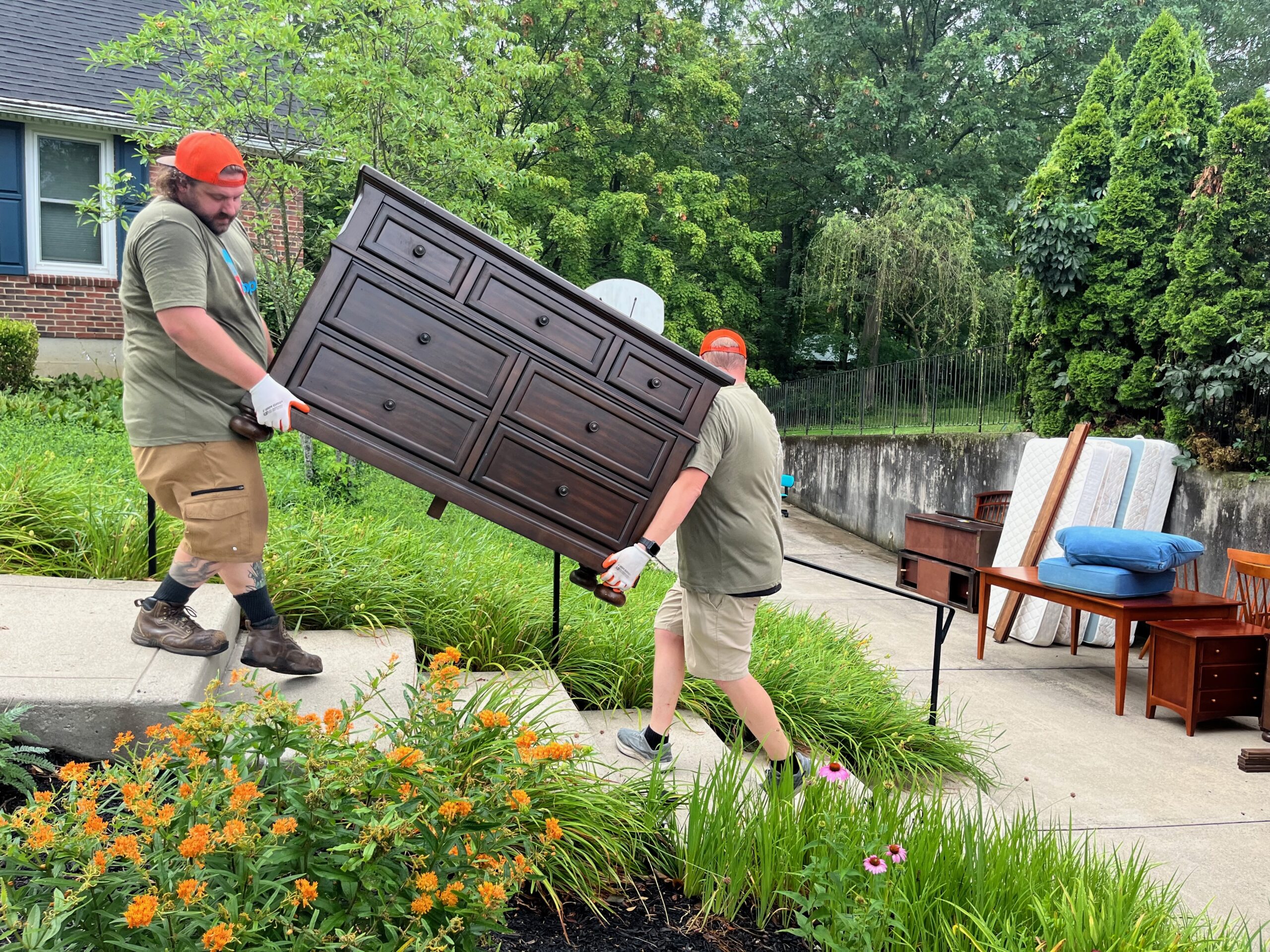
Once you know what can go, avoid creating a second project around transportation. ReSupply offers furniture and home-goods donation pickup from inside the home, so the pregnant woman does not have to carry a dresser, load a car, or find a charity able to accept each large item.
Most pickups are completed within 24 to 48 hours of scheduling, subject to team availability. That makes it possible to use the motivation you have now without letting a donation pile remain in the nursery for weeks.
What Should You Donate Before Baby Arrives?
Prioritize items that occupy useful space or create extra work:
- furniture that blocks a nursery, hallway, doorway, or living area;
- duplicate chairs, side tables, dressers, lamps, or storage pieces;
- working small appliances and kitchen tools you rarely use;
- dishes, glassware, and serving pieces beyond what your household needs;
- clean linens and towels in good condition;
- unused home décor;
- books, toys, games, and hobby supplies your family no longer wants;
- wearable adult or children’s clothing you feel certain about releasing; and
- outgrown baby equipment from an older child, if it meets current safety standards and the receiving organization accepts it.
Donation policies vary. Items with mold, significant stains, pest damage, strong smoke odor, broken components, or safety recalls may not be appropriate to donate. Car seats, cribs, mattresses, and other regulated or safety-sensitive items often have special acceptance rules, so confirm them before promising an item to a charity.
A useful rule is: donate something only if you would feel comfortable giving it directly to another family in its current condition.
Phase Three: Postpartum Decluttering Should Reduce the Load, Not Add to It
The postpartum period can bring joy, exhaustion, physical recovery, interrupted sleep, shifting routines, and mental-health challenges. A simpler home may make some daily tasks feel more manageable, but decluttering should never be framed as a cure for postpartum anxiety or depression.
Reducing visible clutter may remove one source of friction or help some women feel that a space is easier to use. It is not a medical treatment, and a messy home does not cause postpartum depression or represent a mother’s failure.
What postpartum support should look like
After birth, the support network should take the lead on execution. Helpful support sounds like:
- “Would it help if I cleared this surface, or would you rather I leave it alone?”
- “Point to what can go, and I will handle the rest.”
- “I can box the donations, book the pickup, and be here when the team arrives.”
- “You do not need to make this room perfect.”
Do not discard sentimental possessions or make decisions for the mother without her permission. The goal is to return control, not take it away.
If decluttering feels overwhelming, pause it. Caring for the mother and baby comes first. A support person can focus on basic function instead: clear a walkway, remove trash and dishes, restock essentials, and move an already-approved donation pile out of the home.
Postpartum Depression and Anxiety Require Real Support
Perinatal depression is a treatable mood disorder that can occur during pregnancy or after childbirth. The National Institute of Mental Health explains that symptoms may include extreme sadness, anxiety, fatigue, difficulty completing daily tasks, trouble bonding with the baby, and thoughts of death or harm.
The “baby blues” usually involve milder, short-lasting mood changes during the first two weeks after birth. Symptoms that are severe, last longer than two weeks, or interfere with caring for yourself or your baby may be signs of postpartum depression and should be discussed with a health care professional.
Treatment, not tidiness, is central to recovery. Treatment may include therapy, medication, or both.
Help is available in the United States: Pregnant and postpartum mothers and their families can call or text the National Maternal Mental Health Hotline at 1-833-TLC-MAMA (1-833-852-6262) for no-cost, confidential support 24/7. If you are in suicidal crisis or emotional distress, call or text 988. If there is immediate danger, or symptoms of postpartum psychosis such as hallucinations, delusions, mania, paranoia, or severe confusion, call 911 or go to the nearest emergency room.
A Simple Decluttering Plan for Pregnancy and Postpartum
| Phase | The mother’s role | The support network’s role | Practical goal |
|---|---|---|---|
| Early pregnancy | Choose priorities and make short, low-pressure decisions. | Box, label, lift, research, and transport. | Create room before the physical demands of later pregnancy. |
| Later pregnancy or nesting | Direct the project and sort lightweight items within her comfort. | Own stairs, furniture, ladders, disassembly, and pickup coordination. | Clear essential spaces without turning nesting into overexertion. |
| Postpartum | Recover, care for herself and the baby, and approve only the decisions she wants to make. | Handle the complete process and respect her permission and pace. | Reduce daily friction without making cleanliness another demand. |
An Easier Way to Donate Items Before or After Baby
The hardest part of decluttering is often not deciding what to donate. It is getting a couch down the stairs, fitting a dresser into a vehicle, or finding a charity that can accept several different categories of items.
ReSupply, a Veteran-Founded company, connects households with local charities and handles the physical donation-pickup process. Depending on location and availability, the service can offer:
- online booking in about two minutes;
- most pickups completed within 24 to 48 hours;
- service across 48 states;
- pickup from rooms throughout the home;
- help navigating stairs, with Disassembly Available when necessary to ensure safe removal (additional fees may apply);
- delivery to local charity partners; and
- an electronic tax receipt after a successful donation.
Furniture donation pickups start at $99 in most service areas. Pricing can vary based on the items, location, access, stairs, and disassembly needs. See ReSupply’s donation pickup questions for current details.
You decide what your family no longer needs. Let ReSupply do the heavy lifting and help those items reach a local charity.
Schedule a Donation Pickup
Frequently Asked Questions
When should I start decluttering before baby?
You can begin whenever you feel ready and your prenatal clinician has not restricted your activity. Starting early gives you time to work in short sessions and delegate physical tasks instead of rushing near your due date.
Is it safe to declutter while pregnant?
Light sorting and organizing may be reasonable during an uncomplicated pregnancy, but personal medical guidance comes first. Delegate heavy lifting, repeated bending, stairs with boxes, ladder work, and furniture moving. Ask your prenatal care professional about any activity limits that apply to you.
What is nesting during pregnancy?
Nesting is a commonly reported desire to prepare, clean, or organize the home before a baby arrives. Research suggests it often becomes stronger later in pregnancy, but not every woman experiences it, and the exact cause is not known.
Does nesting mean labor is about to start?
No. Nesting is not a reliable way to predict when labor will begin. Contact your prenatal care team about actual signs of labor or any symptoms that concern you.
Can decluttering help postpartum anxiety or depression?
A more manageable space may reduce one practical source of stress for some women, but decluttering does not prevent, diagnose, or treat postpartum anxiety or depression. Persistent, severe, or disruptive symptoms require support from a qualified health care professional.
How can a partner or family member help with pregnancy decluttering?
The most helpful support is complete ownership of the physical and logistical work: boxing approved donations, moving items, checking acceptance rules, booking the pickup, and being present when the items leave. The pregnant or postpartum woman should retain control over what is donated.
How can I donate furniture without moving it myself?
An in-home donation-pickup service can remove furniture from its current room and transport it to a local charity. ReSupply handles furniture and household-goods pickups in many communities across 48 states, with most pickups completed within 24 to 48 hours.
This article provides general educational information and is not a substitute for individualized medical advice, diagnosis, or treatment. Follow the recommendations of your prenatal or postpartum health care professional.